ABOUT
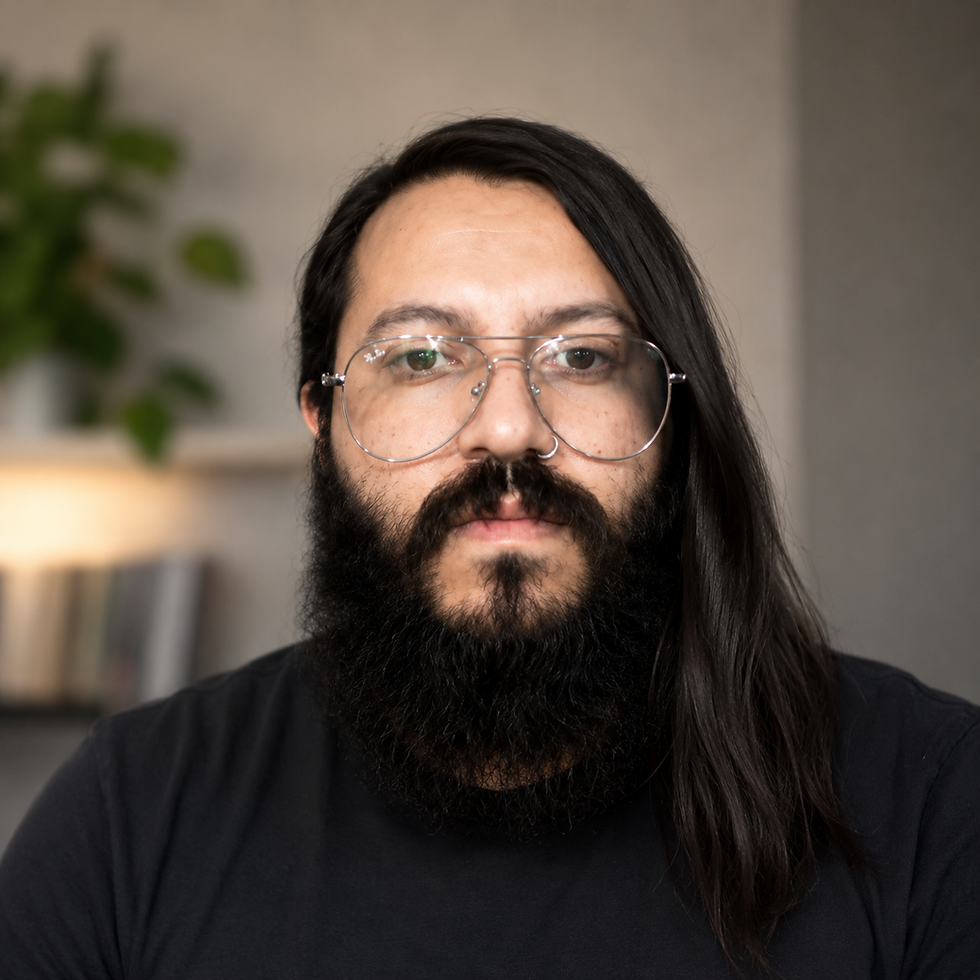
Research shaped the way I think.
Not because I wanted to become a researcher. Because I wanted to make better decisions.
For me, research has never been a phase in a design process or a collection of methods to validate ideas. It became the way I understand complexity before attempting to simplify it.
Over the years, I realized that the most difficult product problems rarely begin at the interface. They begin much earlier — in assumptions, disconnected teams, fragmented workflows, conflicting mental models, and incomplete understanding of how people actually work.
That realization fundamentally changed the way I design.
Design, for me, is the consequence of understanding — not the starting point.
HOW I WORK
Today, I don't start by asking what the interface should look like.
I start by asking:
– What decision is someone trying to make?
– What information do they actually need?
– What prevents them from moving forward with confidence?
Those questions have led me to work across enterprise platforms, fintech products, manufacturing systems, AI-assisted experiences, CRM platforms, and digital ecosystems where clarity matters far more than visual complexity.
WORKING WHERE COMPLEXITY LIVES
I'm particularly interested in products that operate behind the scenes.
The platforms where hundreds of decisions happen every day. Where different teams interpret the same information differently. Where information architecture becomes more important than decoration. Where research directly influences business strategy.
Those are the environments where I enjoy working the most.
Because solving complexity isn't about removing it. It's about organizing it in a way that people can trust.
BEYOND INTERFACES
Throughout my career I've moved naturally between disciplines.
Research, product strategy, information architecture, UX architecture, design systems, and interface design — not because I wanted to collect titles, but because every project demanded understanding the problem from multiple perspectives before proposing a solution.
–
Sometimes that means interviewing users.
–
Sometimes facilitating workshops.
–
Sometimes restructuring an information model.
–
Sometimes designing an entire design system.
The deliverable changes. The objective doesn't. Helping people make better decisions through better products.
10+
years in UX Research, Product Design & Strategy
16+
years in digital design overall
6
domains: enterprise, fintech, AI, eLearning & more
LEADERSHIP
Leadership begins with understanding.
A leader's primary responsibility isn't to hold all the answers, but to facilitate the discovery of them. In complex technical environments, this requires a deep commitment to intellectual humility—the willingness to admit when assumptions are guiding us instead of evidence.
Great leadership is a design problem in itself. It involves architecting a culture where people feel safe enough to be wrong, where research findings aren't viewed as criticism of an existing path, but as the navigation gear needed to find a better one. It’s about building teams that are as curious as they are capable.
I believe in a collaborative leadership model where my role is to remove friction. Sometimes that friction is technical debt, but more often it is a lack of clarity around goals or a disconnect from the user’s reality. My job is to bridge those gaps through consistent research, transparent strategy, and shared ownership of every solution.
True leadership is found in the moments we choose to listen over the moments we choose to dictate. It’s in the quiet work of mentoring, the rigor of honest feedback, and the relentless pursuit of products that genuinely serve the humans who use them.
For me, leadership is not about directing every decision. It is about creating the clarity, trust, and conditions that allow people to make better decisions together.
What I value
I believe good products are built when curiosity is stronger than assumptions.
When research informs strategy.
When design becomes evidence instead of opinion.
When systems are designed to evolve, not simply to launch.
That's the kind of work I'm interested in.
And that's the kind of teams I enjoy building with.
Closing statement
I research to understand.
I design to solve.
Because the best interfaces are usually the result of hundreds of decisions that users never have to think about.
That realization fundamentally changed the way I design.